
AI for Family Engagement in Higher Education: What Comes Next?
It’s 11:30 p.m., and a parent has a financial aid question. The office is closed, so instead of hunting through the college website, they ask ChatGPT.
To them, it’s a natural reaction — consumer technology has taught families to expect and self-access information on demand. But that broad search could return inaccurate details that could lead to confusion, frustration, and student outcomes impact.
In a survey of more than 2,500 parents of high school students, 57% said they had used tools such as ChatGPT to evaluate colleges and compare options on behalf of their children. AI is officially a part of how families look for information. For colleges and universities, the challenge is keeping pace with higher expectations for timely answers while making sure those answers are accurate, trustworthy, and still feel human.
Keep reading for a practical look at how colleges can use AI to give families timely, trustworthy support, save staff time on repetitive work, and turn recurring questions into better communication.
Why generic AI can put family trust at risk
AI is changing the tools institutions can use, but it doesn’t remove their responsibility to give families accurate information. Most AI tools are very good at sounding certain, but that confidence shouldn’t be mistaken for accuracy. A general-purpose AI model knows a lot about a lot, but it doesn’t automatically know an institution’s current deadlines, approved policies, upcoming events, or the difference between what a prospective family and a current family need to hear.
Generic AI, whether it’s ChatGPT, Claude, or Gemini, knows a lot. But embedded AI knows what you’re trying to do. It has more context about your day-to-day work, the challenges you’re facing, and the audience you’re trying to reach.
James Bright, Co-Founder and CTO of CampusESP, put the difference plainly: “You ask a general question, you’re going to get a more generalized answer.” Institution-specific context helps focus the response.

That’s why CampusESP built ESP Sense™, it’s an embedded AI layer. ESP Sense supports the work teams already do by using the institution’s existing family content, audiences, and communication tools. It draws from the approved family content, communities, emails, deadlines, events, websites, and other resources an institution already uses in CampusESP.
With ESP Sense, institutions aren’t starting with a blank AI tool, building a separate knowledge base, or asking a general model to figure out their audiences. They are turning intelligence on around something they have already built, while still adding school-specific guidance when needed.
Families expect timely and accurate answers to their questions
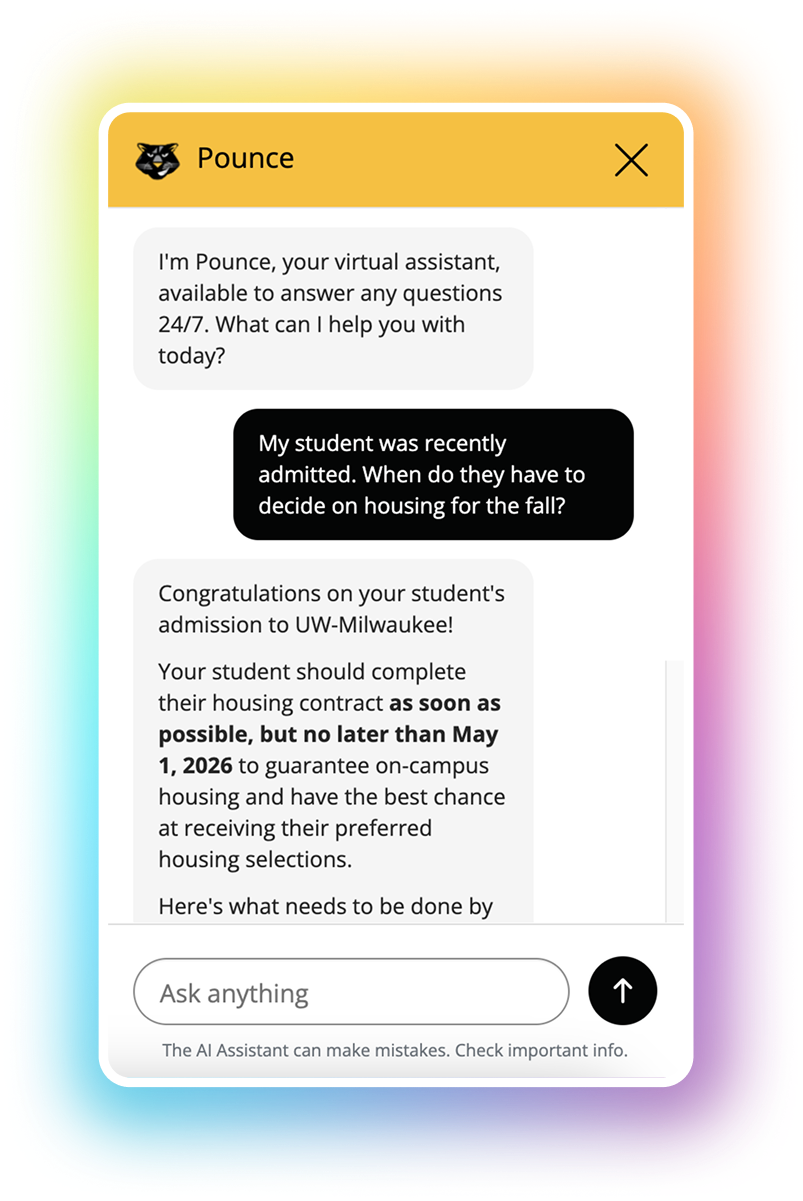
CampusESP’s ESP Sense™ Family AI Assistant is a new engagement layer that delivers instant, personalized support while offering deeper insight into what families need most. Early use found that 41% of family activity happened during nights and weekends. This is when families are sitting around the dinner table, talking through a decision, or helping a student complete a task.
If a reliable answer is not available then, families turn to a generic AI tool, an outdated web page, or a Facebook group where the loudest answer is not always the right one.
Families don’t care whether the answer really comes from AI or not. They just want the answer when they need it.
AI can help institutions keep pace with the growing volume and frequency of family communication without asking already stretched teams to be available around the clock. But keeping up with volume alone is not enough. Quality still shapes the decision: 96% of prospective families say the quality of the school’s communication is the most important factor in the decision making process. More communication only helps if each answer is clear, relevant, and worthy of families’ trust.
Start your AI strategy with everyday work
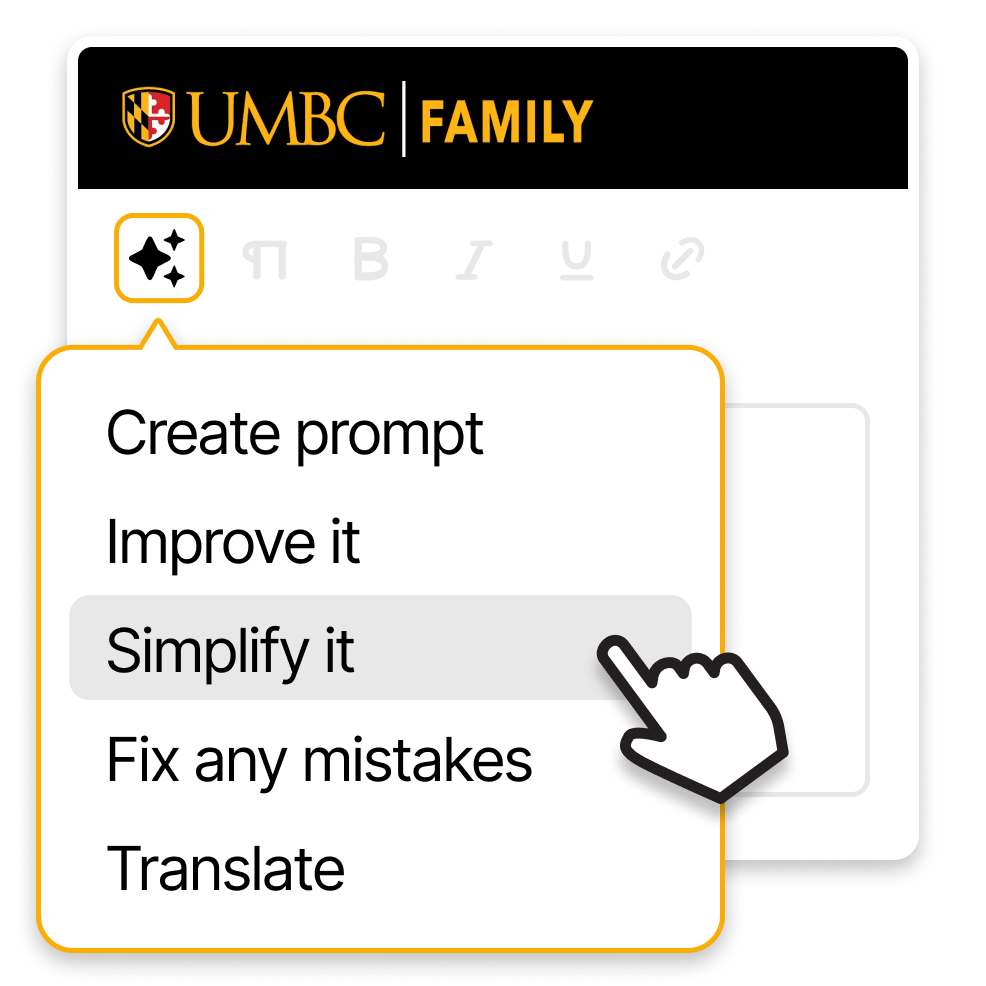
AI strategy can get overwhelming and abstract very quickly. At CampusESP, our approach starts with helping customers solve real problems. Maybe your team needs to turn a long email into a text message, translate an orientation reminder for more families, or handle the same housing questions that arrive by phone every summer.
CampusESP’s AI-powered workflows live directly inside the platform, helping teams write, edit, translate, personalize, and adapt messages for SMS without adding another system to manage.
In 2025, 84% of CampusESP customer schools used these tools, completing more than 13,300 AI-supported actions. Editing was the most common use, followed by translation and content creation.
That pattern tells us something important: AI doesn’t have to transform an entire operation overnight to be valuable. Often, it earns trust by quietly making a familiar task faster and easier.
“I see this as a way to make a lot of our jobs easier,” James said. For higher ed teams with broad responsibilities and limited resources, AI can help them “do more with less.”
How CampusESP is using AI to strengthen family engagement
Family support is one of the clearest places to put this approach to work. The questions are often urgent, repetitive, and asked after business hours. AI can help families get to that trusted information faster while freeing staff to focus on the situations that need judgment, empathy, or a personal conversation.
Before putting an AI assistant in front of families, institutions need clear answers to a few questions:
What information is shaping the answer?
How does the tool know who is asking?
What guardrails and permissions are in place?
When does a person review or approve the work?
Trust depends on whether the system around the model gives families an answer grounded on the right accurate information, personalized for the right audience,and reviewed appropriately.
CampusESP has enabled its AI assistants for roughly 300 institutions through an initial trial. Across 53,439 users, the assistants have handled 138,479 messages. Families are also telling us directly that this kind of support matters. In a CampusESP survey of 376 families, 85% said an AI assistant would be valuable. It ranked as their top preference for getting a quick answer, ahead of email, phone, and the web.
What institutions can learn from those messages may be even more valuable. When families ask repeated questions about move-in, payment plans, registration, mental health resources, or career outcomes, the institution gets a clearer picture of where communication is breaking down.
Those patterns can guide future content, reveal an emerging concern, or show where a personal follow-up is needed. In other words, embedded AI can do more than answer questions. It can help institutions listen at scale.
The next step for AI-powered family engagement
Today, ESP Sense helps teams create clearer communication and gives families a way to find trusted answers when they need them. Next, CampusESP is building toward agentic support that helps teams move from a question to the next step.
James sees the next shift as software that lets teams “describe what [they] want to have happen” and then helps make it happen. That is the direction CampusESP is building toward: AI that can reduce repetitive work, surface what families need, and help teams take the next step, with human judgment still in control.