
How to turn family engagement into a record-setting giving strategy

When Molloy University talks about giving, they don’t start with dollars. They start with mission.
Angela Zimmerman, Director of Development and Alumni Relations, and Robert “Bobby” Meyer, Senior Director of Philanthropy, recently shared how their team approaches family engagement as a long-term advancement strategy.
The result was not just incremental growth. It was the largest Giving Tuesday in Molloy’s history, raising $40,000+ and a six-figure Giving Day that continues to grow.
As Angela explained, families need to see that they have “a meaningful role, place, and space” within the university community. When that happens, giving becomes less about a transaction and more about investment.
Learn how Molloy built that culture. (Or click here to tune into the conversation).
Donor discovery begins at enrollment
At Molloy, family engagement doesn’t start with a Giving Day campaign. It starts the moment families begin connecting with the university.
As Angela explained during the session, the team begins engaging families as early as the prospective student stage. Molloy uses CampusESP across three modules to create what she describes as a seamless pipeline from enrollment to long-term engagement.
Using CampusESP’s onboarding form, families self-identify interest in giving and even leadership opportunities. That information flows directly into advancement strategy. Cultivation starts when families are forming their first impressions of the university.
Molloy pairs that information with the Parent Promoter Score™, which tracks engagement behaviors like logins, email opens, and clicks. Rather than broad outreach, the team can focus on families already showing interest.
For Bobby and his team, that shift changed everything.
“Instead of approaching families cold, we’re able to prioritize outreach to those who have demonstrated affinity,” he shared. That allows major gift conversations to feel “more natural and relationship-driven rather than transactional.”
Angela echoed that perspective. When outreach begins with families who have already expressed interest, she explained, it becomes “more of an interactional relationship than a transactional relationship.”
The results speak for themselves:
127% increase in families interested in giving year over year
73% of identified major gift prospects made a donation
For a small advancement team, prioritization is essential. CampusESP became what Bobby describes as an “early discovery tool” that complements traditional prospect research by surfacing affinity long before a gift is made.
Turn early communication into belonging
Families cannot support a mission they do not believe in or understand.
Angela described Molloy’s approach as a seamless pipeline: student enrollment connects to student affairs, which connects to alumni relations. Families are not treated as a separate audience. They are part of one continuous community.
Events like Family and Alumni Weekend bring more than 600 members of the Molloy community together, including students, alumni, families, and partners.
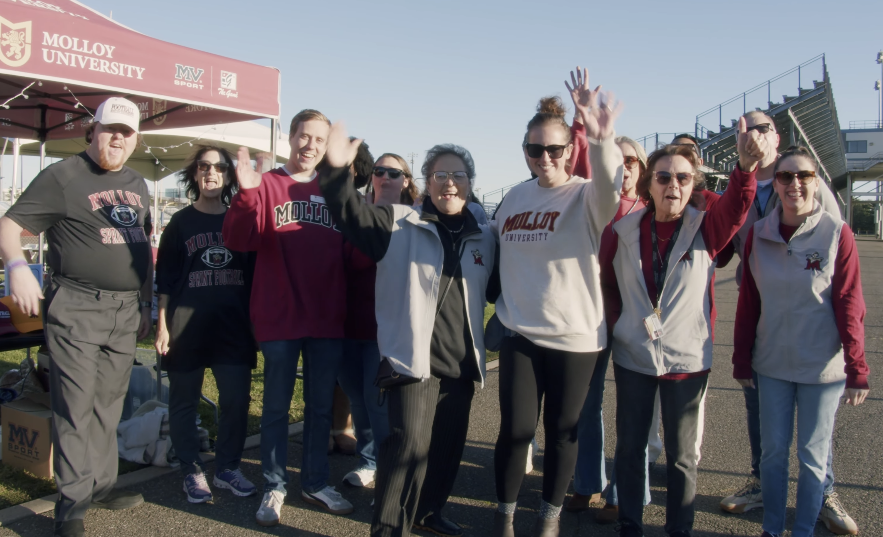
Angela explained that these experiences help families move from living vicariously through their students to recognizing that they themselves have a place in the Molloy community.
Events like Legacy for Learning bring scholars, donors, and families together to celebrate impact. Golf outings and galas allow families to see the mission in action and witness firsthand what their investment supports.
At the same time, Molloy is careful about balance.
Families receive consistent communication through the CampusESP portal, newsletters, and segmented messaging. But advancement content does not crowd out enrollment or student affairs updates. Giving messages are woven into the broader rhythm of communication, not layered on top of it.
That balance builds trust. When Giving Day arrives, families are not surprised by an ask. They already understand the mission behind it.
Giving Day reflect the culture you build all year
When Molloy’s Giving Day, “All In Day” arrives, it does not feel like a sudden ask. It feels like a celebration.
Angela described it as an opportunity for “our entire community, our students, alumni, friends, families, to come together in celebration and to invest in our mission.”
The messaging is mission-centered and affinity-driven. Families can support scholarships, schools, the annual fund, or the Student Success Fund.
“People can invest in whatever calls their heart,” Angela said.
Promotion was layered and intentional. Digital messaging through the CampusESP portal, newsletters, and email kept families engaged, while on-campus ambassadors and giving tables reinforced the message in person.
“The community is seeing itself in every aspect of this campaign,” Angela shared.
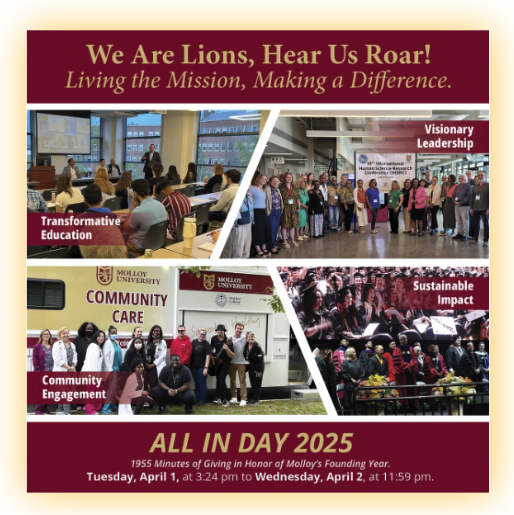
The results reflect that alignment: $202,468 raised on All In Day, $30,000 more than 2024 and $100,000 more than 2023.
These were not one-time spikes. They were the outcome of consistent cultivation.
From engagement to leadership
Perhaps the clearest sign the strategy is working is what happened next.
One outcome of Molloy’s family engagement work was the creation of the Family Leadership Council. The group brings together parents who want to make a meaningful impact, “not just financially, but being ambassadors, advisors, and champions of the university,” Bobby explained.
The council began with families who had already raised their hands through onboarding and engagement data. Within months, Molloy established a council of 25 couples.
By the time families were invited into leadership conversations, the relationship already existed.
“There was already an established relationship,” Bobby said.
The council now plays a key role in advancing Molloy’s mission by:
Acting as ambassadors for the university
Providing advisory perspective
Championing campaigns like All In Day
Participating in peer-to-peer outreach
For upcoming campaigns, messaging inside the CampusESP portal will come directly from council chairs. Emails, newsletters, and portal promotions will include parent-to-parent outreach throughout the giving cadence.
Angela describes the goal as building “a culture of philanthropy where every segment of your community sees their place and opportunity to contribute.”
As Bobby put it, CampusESP has helped Molloy treat families “not just as supporters of their students, but as long-term partners in the university’s mission.”
Record-setting giving days do not start with a countdown. They start with connection.