

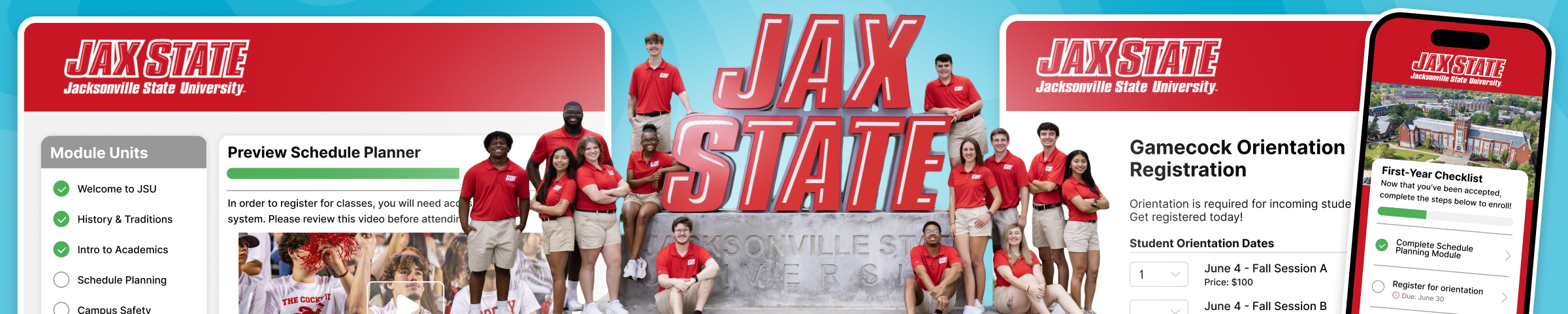
At Jacksonville State University, a team of four full-time staff manages the orientation experience for roughly 2,000 incoming students — 53% of whom are first-generation — every year. Since 2018, the team has worked with three different orientation platforms, each bringing new capabilities, but also new frustrations.
At NODAC 2026, Keaton Glass, Director of 1st & 2nd Year Experience, and Eric McCulley, Coordinator of 1st & 2nd Year Experience, walked through their journey: the frustrations, the lessons, and, finally, the success and results that came with their third platform, CampusESP for Student Orientation.
In their first full year, Jax State reached 95% orientation attendance, saw a 14% increase in first-year enrollment, and saw students complete over 6,000 checklist items in just three months. Keep reading to see how they did it!
Round one: registration, but not much else
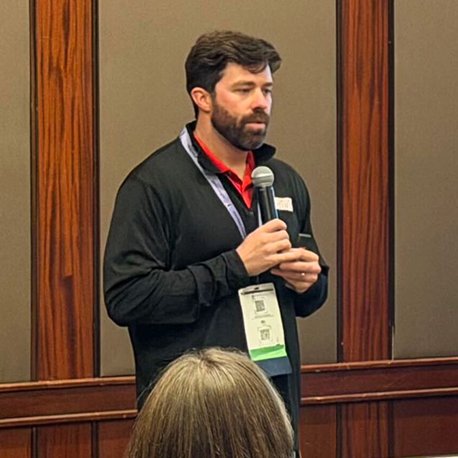
Keaton Glass presenting with CampusESP at NODAC 2026
When Glass joined Jax State in 2018, he inherited a system that did one thing well: getting students registered. Beyond that, communications were limited to email, the interface felt dated, check-in was tracked on paper, and payments were a headache. “It worked great for registration, but outside of that, it was very static,” Glass recalled.
Those limitations became harder to overlook in 2020, when students needed more guidance than a confirmation email could provide. At the same time, a campus-wide push to consolidate technology prompted Glass and his team to move onto a platform another office already owned.
Round two: more features, more workarounds
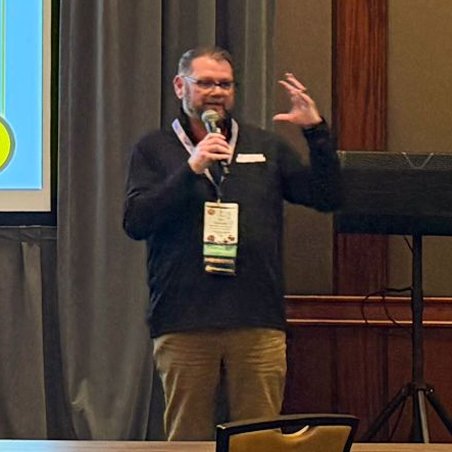
Eric McCulley presenting with CampusESP at NODAC 2026
On paper, the new platform looked like an upgrade, with communication tools and student checklists. But it was designed for student organizations and events, not a months-long effort to keep students engaged, excited, and moving forward.
McCulley recalled how checklists couldn’t be personalized, staff couldn’t reliably track student progress, and managing special student groups required manual workarounds. And when something broke, the vendor lacked the orientation-specific expertise to help. “They couldn’t give us technical answers on how to set the platform up for our needs,” McCulley said. “That was very frustrating.”
Turning pain points into a plan
After two platforms missed the mark, Glass and McCulley focused on the problems they’d spent years working around: limited flexibility, outdated interfaces, little visibility into student progress, and a need for responsive support.
Just as important was giving staff time back. “We needed a system that could help our team spend less time on registration logistics, and more time creating engaging experiences for students,” said Glass.
Round three: checking all the boxes with CampusESP
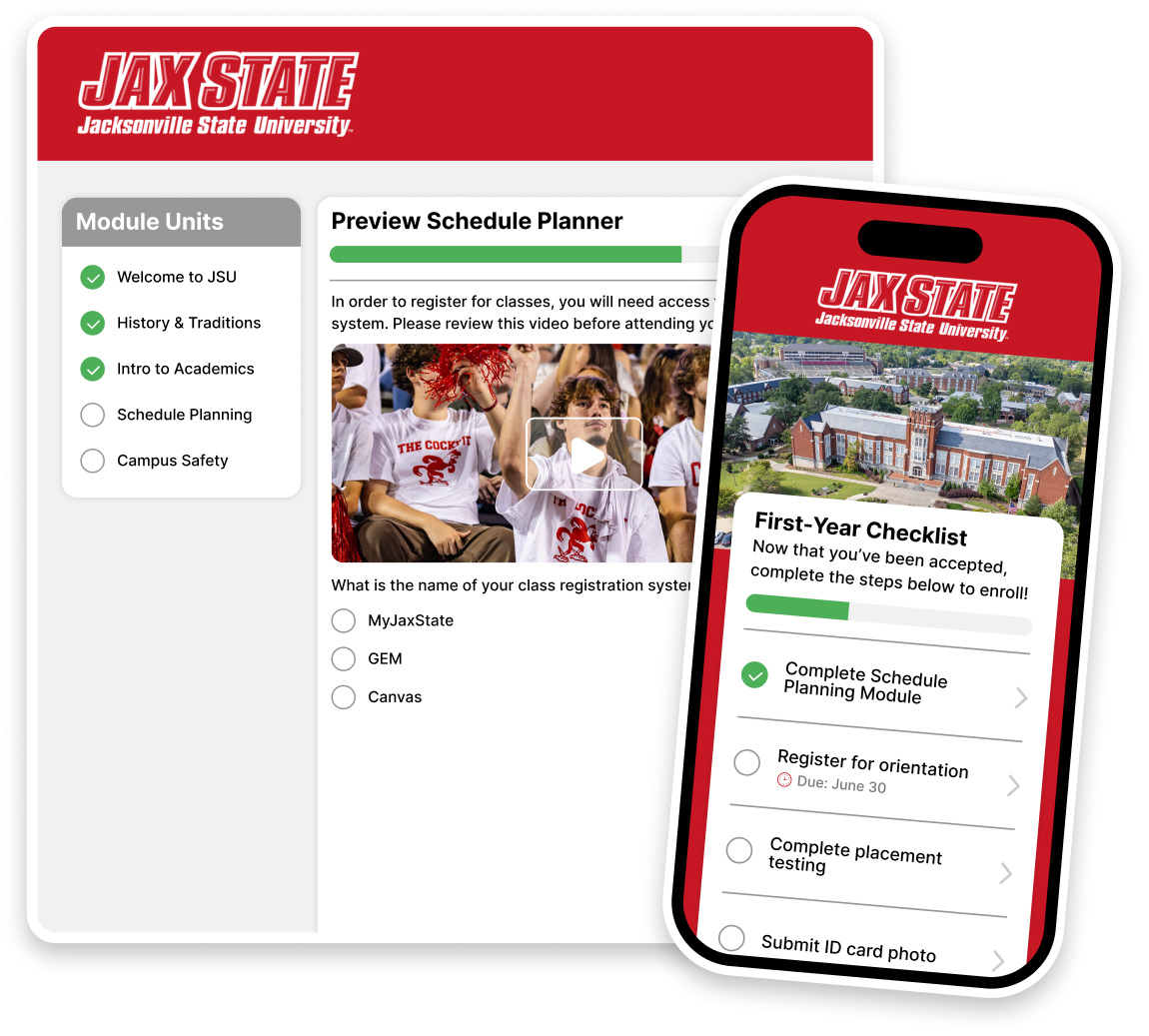
Jax State was already using CampusESP for Family Communication, so the team was familiar with the platform and had built trust with the team behind it. Adding Student Orientation was a natural next step, and as an early partner, Jax State had a hand in shaping the product.
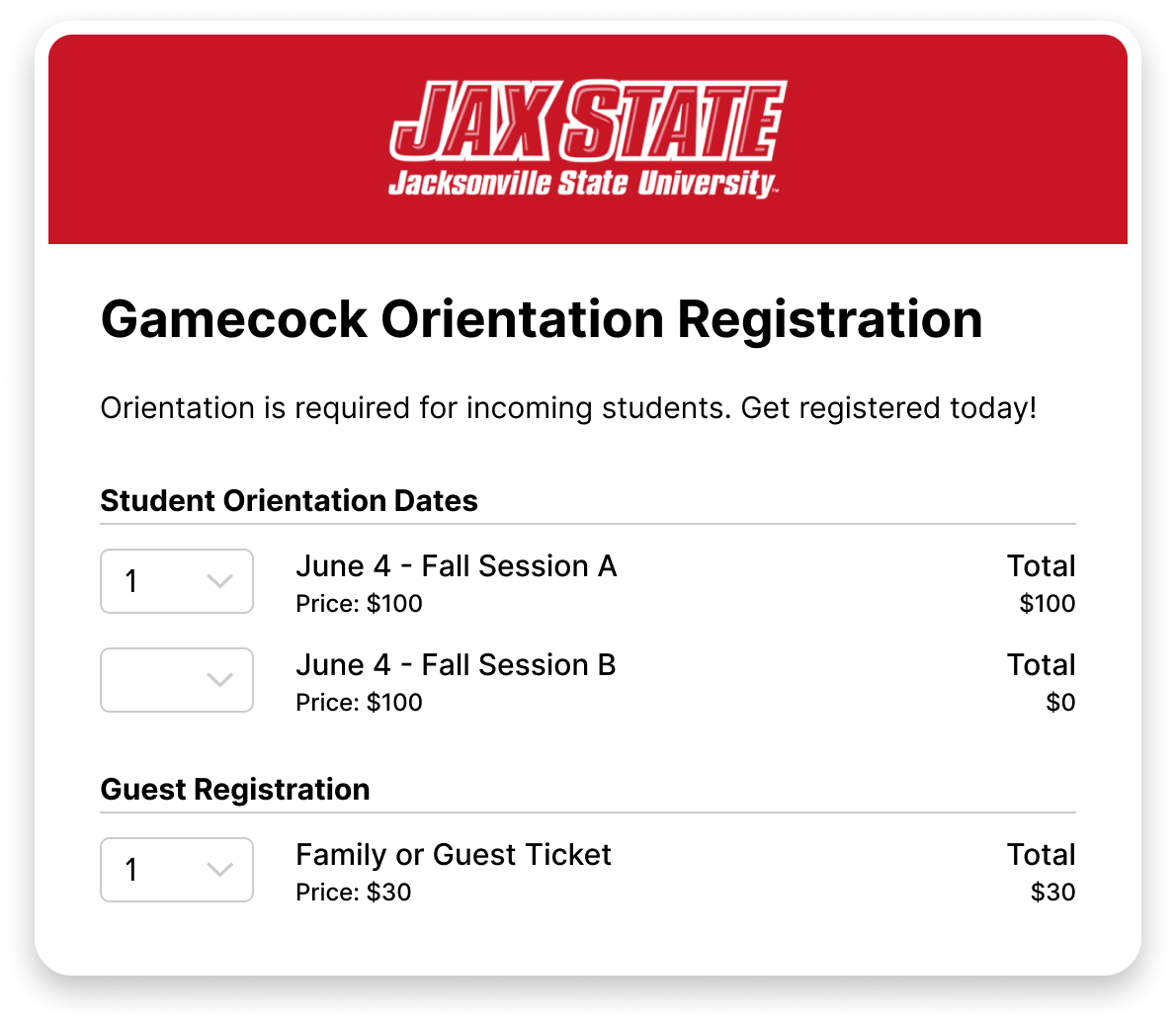
One priority was the ability for students to change their orientation session themselves. Now, instead of calling the office and asking staff to make the switch, students can log into the portal, select a new date, and move on.
“That was one of the most crucial components for us,” McCulley said. The flexibility also made it easier to register students at admitted student and early action events, contributing to a 95% attendance rate and an 11% increase in orientation registrations.
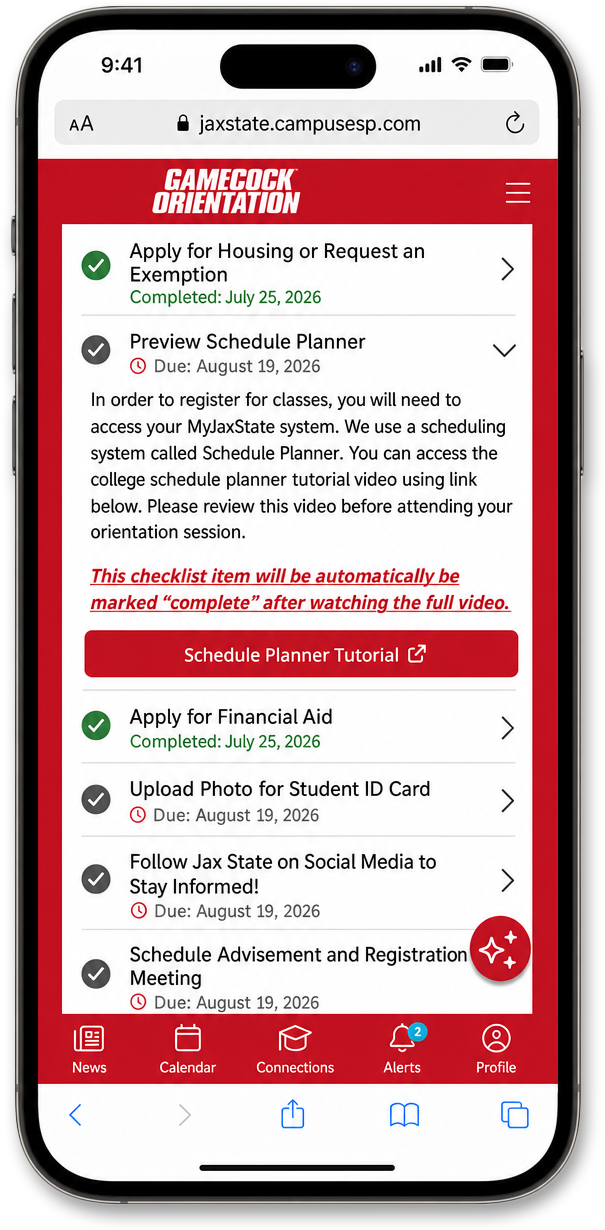
Personalized checklists now show students what they need to complete and help staff spot who’s falling behind. Discussion Boards give groups like international students and student-athletes access to relevant information and communities, while automated reminders and two-way texting keep students connected to the team. “Texting has been really important for us,” McCulley added. “We love that feature.”
Together, these tools gave Jax State more ways to keep incoming students informed and moving forward. And the results extended beyond orientation: in its first full year with CampusESP, the university saw a 14% increase in first-year enrollment.
Better workflows & stronger support
The changes have made a difference for the team, too. “CampusESP helped us cut back significantly on the calls and daily time spent on admin tasks, so we can really focus on connecting with students,” Glass said. Today, the team spends just three hours per week managing their CampusESP platform.
They’ve also found a partner that understands the realities of orientation. After struggling to get useful answers and guidance from a vendor unfamiliar with the space, a knowledgeable, experienced team in their corner has been a welcome change.
“The technical support has been awesome,” Glass said. “If we ever need anything, CampusESP is there for us.”
Looking ahead, Glass and McCulley plan to expand two-way texting and use of the Student AI Assistant. They’re also establishing baselines for question volume, check-in time, registration completion, and staff workload, to better measure what’s improving from one cycle to the next.
Jax State’s advice for choosing an orientation platform
Glass was quick to acknowledge that every institution’s orientation needs are different, but shared a few lessons from Jax State’s experience:
Define the problems before you start shopping. Where are students getting stuck? Which workarounds eat up the most staff time?
Know your non-negotiables. Jax State wanted students to be able to switch orientation sessions on their own, without calling the office.
Evaluate the support and the software. A feature is only as useful as your team’s ability to implement it and get help with it when things go awry.
Build internal buy-in around real problems. Specific student and staff pain points can make a stronger case than a feature list.
Make implementation count. Use a new platform as an opportunity to rethink the entire experience, not just recreate the old one in a new system.
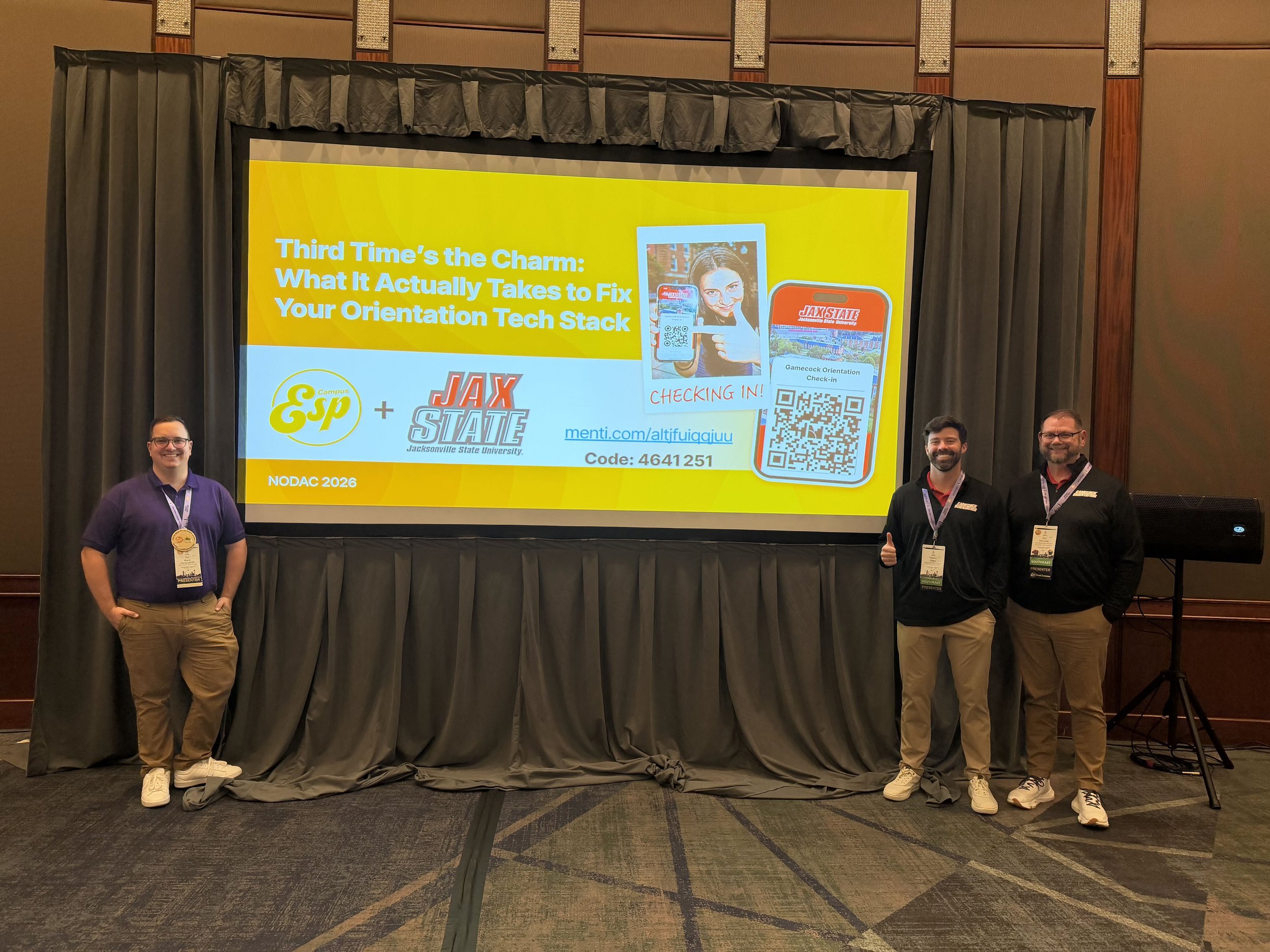
Glass and McCulley presenting with CampusESP’s Tim Black at NODAC 2026
Planning your next orientation cycle?
Talk with our team about where your current process is creating friction and what a better approach could look like with CampusESP for Student Orientation. Book a demo today!