How 4 institutions increased first-year enrollment with CampusESP for Student Orientation

Whether coordinating a week of on-campus programming, managing summer sessions, or guiding students through virtual transition experiences, executing a top-tier orientation experience adds up. Registration, communications, checklists, learning modules, and student questions all need attention — and disconnected systems can make it harder to keep everything running smoothly.
CampusESP for Student Orientation brings the entire orientation experience under one roof, guiding students through key steps, supporting broader enrollment efforts, and giving your team less to manage behind the scenes.
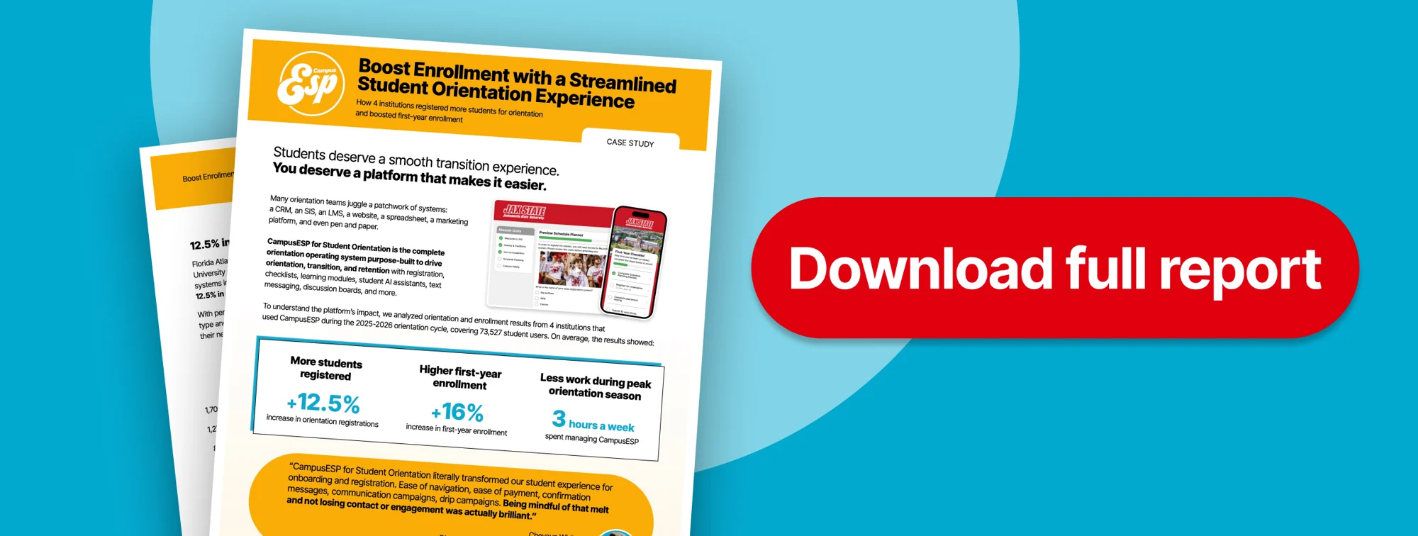
We analyzed orientation and enrollment results from four institutions representing 73,000+ incoming students across the 2025–2026 enrollment cycle. Here’s what we found:
More students registered for orientation. Schools using CampusESP for Student Orientation saw an average 12.5% increase in orientation registrations year over year.
More students enrolled. Schools using CampusESP for Student Orientation saw an average 16% increase in first-year enrollment.
Teams spend less time managing orientation. Orientation teams spent an average of 3 hours per week managing CampusESP for Student Orientation.
Get more students registered for orientation



Orientation registration is often one of the first steps between admission and arrival. But when the process is confusing, spread across systems, or reliant on manual follow-up, students can lose track of what to do next.
CampusESP for Student Orientation makes registration easier to manage and navigate for students and teams alike. Personalized forms tailor registration details to each student’s major or student type, while automated reminders keep orientation details on their radar. Students get a clearer path to orientation — and teams get a more streamlined way to manage registrations. Across the four institutions in the study, orientation registrations increased by an average of 12.5% year over year.
Enroll more students

Getting students to register for orientation is a milestone, not the finish line. Between orientation and the first day of classes, students still need information, reminders, and support to complete the steps ahead.
With tools like checklists, text messaging, learning modules, and the Student AI Assistant, teams keep important information accessible while helping students stay engaged and on track.
Across the institutions in the study, first-year enrollment increased by an average of 16% year over year. The growth reflects the collective efforts of teams across campus working toward a shared goal: making the most of their admitted cohorts. CampusESP for Student Orientation extends those efforts, helping institutions scale communication and support for incoming students.
Spend less time managing the process
Behind every orientation experience is a team coordinating logistics, answering countless questions, resolving registration errors, and keeping systems in sync.
In the case study, teams spent an average of three hours per week managing CampusESP for Student Orientation. By bringing key pieces of the orientation experience into one platform, CampusESP reduces the need to jump between systems, troubleshoot workflows, and repeat manual tasks.
That means more room for the work that benefits from a personal touch: mentoring orientation leaders, coordinating with campus partners, helping students navigate specific challenges, and making sure everyone feels prepared.
No two orientation programs look exactly alike — but every team needs a way to keep students moving forward without logistics getting in the way. CampusESP for Student Orientation gives teams a more connected way to manage that experience, from registration through the first day of classes, so students know what comes next and teams can focus their time where it matters most.