

Supporting Black student success through family engagement
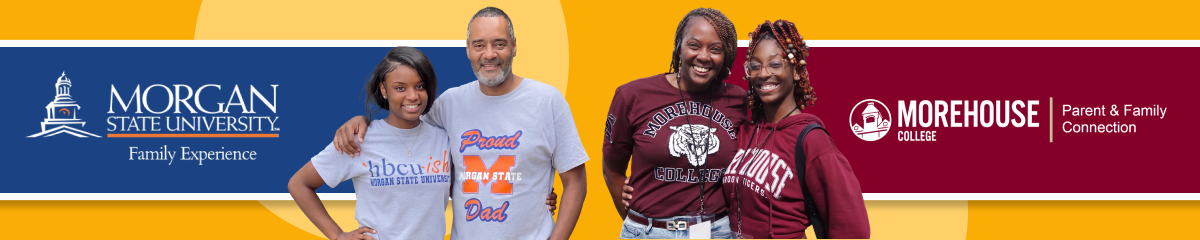
“When we strengthen families’ understanding of the available resources, we’re not just informing them. We’re truly strengthening the student support network.”
That’s how Katina Henderson-Hawkins, Director of Event Sponsorships, Partnerships and Parent Engagement at Morehouse College, framed the role of family engagement in Black student success.
In a conversation with Katina and Ernest Brevard Jr., Ed.D., Assistant Vice President for EMASS Operations at Morgan State University, both HBCU leaders shared how they use CampusESP to make that support more proactive and easier to act on.
At Morgan State, that means communicating with families as soon as students are admitted, mirroring key enrollment steps, and using CampusESP as a trusted source when processes change or misinformation spreads. At Morehouse, it means helping families become “coaches, not quarterbacks” as students navigate college life.
Here’s what other campuses can learn from their approach to building trust, reducing confusion, and turning family connection into real support for Black student success.
Start family engagement early in the enrollment journey
At Morgan State, family engagement begins as soon as a student is admitted. Parent and family contact information is brought into CampusESP early so families can receive communications that mirror the student’s next steps, including welcome messages from campus leadership, introductions to key resources, financial aid guidance, and information about Bear Essentials, Morgan State’s one-stop customer service area.
As Ernest put it, “Coming to college is not just an experience for the student. It’s an experience for the entire family, to include mom, dad, grandma, uncle.”
That early communication matters because admitted families are not just waiting for a decision. They are helping students make one. Cost, scholarships, campus safety, housing, academic support, and confidence in the institution can all shape whether a student moves from admitted to enrolled. In fact, 96% of prospective families say the quality of communication with parents and families is valuable in the college decision process, and nearly three in four expect to hear from colleges at least weekly.
For Morgan State, that mindset is especially important for first-generation families and legacy families. First-generation families may be learning the enrollment process for the first time. Legacy families may be relying on what they remember from their own experience, even when policies, timelines, and systems have changed.
Student orientation can clarify the path from admitted to enrolled
At Morgan State, one of the biggest opportunities to reduce confusion was New Student Orientation. Instead of treating orientation registration as a separate step, the team used CampusESP for Student Orientation to make it part of the admitted-to-enrolled process.
Now, admitted students are imported into CampusESP and receive personalized nudges to register for orientation. Once a student registers, Morgan State confirms them in admissions and allows them to move forward with housing. That gives students, families, and staff a clearer sequence to follow: register for orientation, confirm enrollment progress, then move forward with housing.
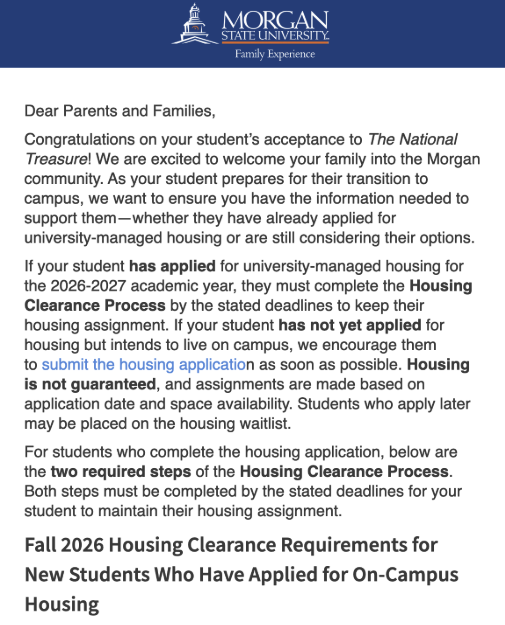
“We’re able to walk them through the journey a little bit easier,” Ernest said. “We’re able to send the same communications that we’re sending out to the students about the next steps in orientation and send that information out to the parents. And it’s really easy.”
The shift has already made a difference. Morgan State saw orientation registrations and enrollment confirmations more than double year over year, while also reducing registration errors and cutting down on calls and emails from students.
Get the full story: https://www.campusesp.com/blog/morgan-state-optimizes-orientation-registration
Link ROI and career outcomes to student retention strategies
For families, concerns are usually centered around two big questions: how do we make this work financially, and how will this experience help our student succeed after graduation?
That is why financial aid and ROI cannot sit in separate silos. Black families are far more likely than the average family to have frequent conversations with their students about financial aid, cost and tuition, campus safety, mental health, and academic advice. And 60% of Black families begin the conversation about career as early as freshman year.
At Morgan State, the team builds financial aid guidance directly into the family journey. Families can connect with financial aid and Bear Essentials, attend webinars and town halls, review payment plan timelines, and access a dedicated CampusESP page for federal financial aid updates.
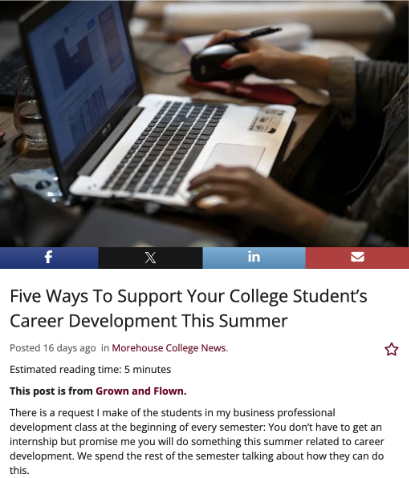
At Morehouse, Katina said the same level of clarity applies to long-term value. Families want to understand how internships, research, study abroad, networking, alumni mentorship, and leadership development connect to life after graduation.
“Families really want to know that their student is progressing toward a meaningful future, not just a regular job, especially after an investment like this,” Katina said. “Our job is to help them see the connection between today’s experiences and tomorrow’s opportunities.”
Career services and job placements are among the most important topics for families, yet satisfaction with that information is much lower. When families cannot clearly see how college connects to outcomes, the value of the investment becomes harder to understand.
Morehouse makes that value more visible through alumni stories, mentorship, and examples of how students turn the Morehouse experience into leadership, service, and career success. Morgan State does the same kind of work on the financial side by helping families understand what has to happen now to avoid stress later.
Together, those strategies give families clear information they can use to help students make informed decisions, stay on track financially, and see the value of college experience.
Turn parent involvement into real student support
Family engagement works best when families have a clear way to participate, not just receive updates. Nearly half of families say they want more opportunities for involvement, and Morehouse and Morgan State are showing what that can look like in practice.
At Morehouse, the Morehouse College Parents Council is one of the clearest examples. Katina said she “could not speak about anything regarding parent engagement at Morehouse College” without talking about the council, also known as MCPC.
The council includes 13 parent volunteers: 9 regional representatives and 4 executive board members. Its mission is to foster communication between the college and families while improving the undergraduate experience for both students and families.
Parent council members show up at campus events, share information back with families who cannot attend, host similar gatherings in their own regions, and serve as a bridge between the college and the parent community. During midterms and finals, council members come to campus to pass out snacks and offer support to students. They also raise money for scholarships, with more than $20,000 raised to date.
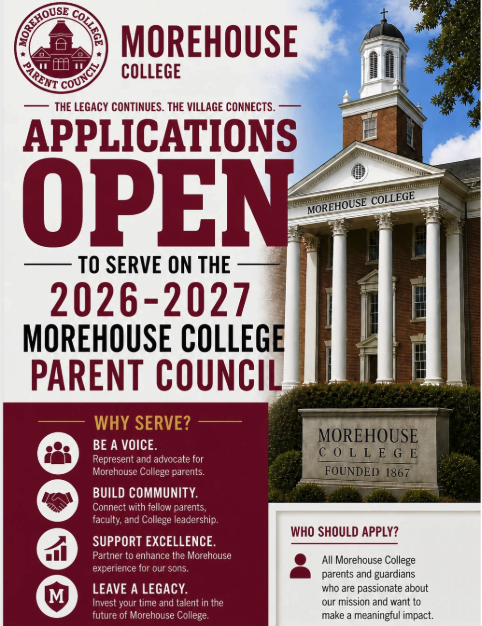
The team promoted parent council applications through CampusESP, then ran the council election through the platform using a survey-style ballot. “It really just made it easy,” Katina said.
Morgan State is also giving families practical ways to support students beyond their own household. Ernest shared the university invites families to contribute to its food resource center, which helps ensure students can eat with no questions asked. Families are also encouraged to support the career closet by donating professional clothing that students can use for interviews, internships, and first jobs.
Use discussion boards to build trusted parent-to-parent connection
Families want more than updates from the institution. They want connection, involvement, and a place to ask questions with other families who understand what they are going through. Only 30% of families say they are satisfied with opportunities to connect with other families, and only 28% trust parent Facebook groups as a reliable source of college information.
In-person events, parent councils, and regional gatherings are important, but not every family can be on campus. CampusESP Discussion Boards give families a moderated virtual space to ask questions, share advice, and learn from other families going through the same experience.
For Morehouse, that creates an opportunity to offer families a better space for connection. Through CampusESP Discussion Boards, families can ask questions, share advice, and support each other in a moderated environment where the institution can help keep information accurate.
“It is very, very important that we are able to help inform with accurate information in a timely fashion.” Katina said.
The boards also help Morehouse see what families are really asking. If several families are confused about an event, deadline, or process, that becomes a signal to clarify the message through CampusESP.
The larger opportunity is simple: give families a place to belong, while giving institutions a clearer view of the questions, confusion, and conversations that need attention.