

The Blog
Whether you're just starting or scaling, the trends, tips, and to-dos to improve your parent engagement strategy.
Featured
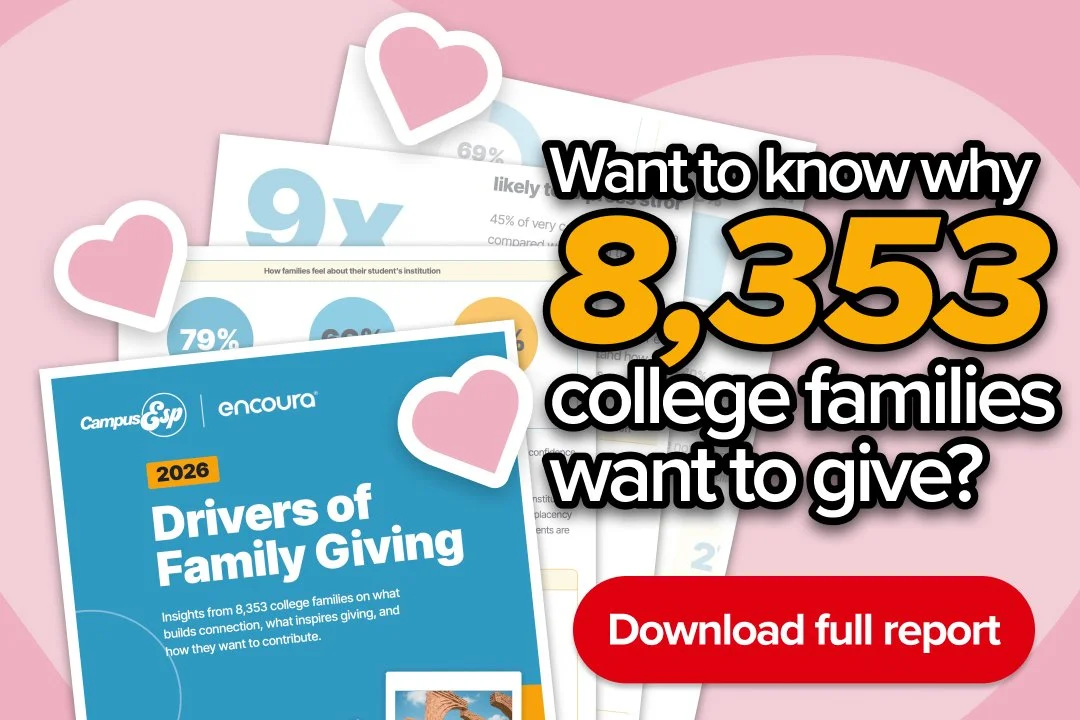
What makes 8,300+ families want to give
The Drivers of Family Giving report (in partnership with Encoura) asked 8,300+ families what earns their trust — and ultimately, their financial support. Their answers point to a clear opportunity for Advancement teams: build the relationship before making the ask.
AI for Family Engagement in Higher Education: What Comes Next?
How can colleges meet rising family expectations for timely support? Discover CampusESP’s thoughtful approach to AI-powered family engagement.

Building communities that actually meet families’ needs
Families want trusted answers and opportunities to connect with one another. See how KU, GW, and Drexel use Discussion Boards to build strong family communities — without creating another Facebook-style feed.

Your month-to-month roadmap for family communication
We’ve analyzed engagement data from more than 18 million clicks from families using CampusESP in order to understand what information they need – and when. Consider this your Roadmap for Family Communication.
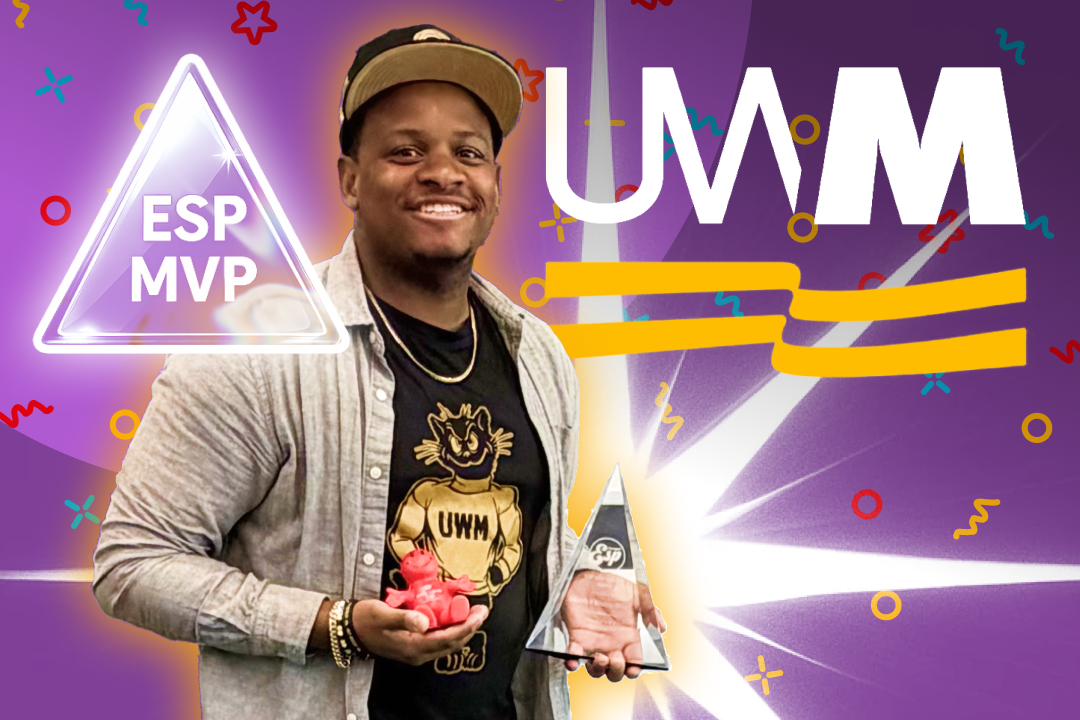
University of Wisconsin-Milwaukee turns AI into access with the Family AI Assistant
See how UW-Milwaukee uses the Family AI Assistant to make answers more accessible, support families 24/7, uncover gaps, and earn a front-row seat to what families really need.
A practical guide to scaling family engagement with campus partners, AI, and CampusESP
Texas Tech University and Webster University scaled family engagement year-round without adding more work to already stretched teams. Learn how campus partners, ready-to-use content, AI, and discussion boards made it possible.
More of what 43,000+ families really want from your college
More data on what families think about involvement, financial clarity, and return on investment.
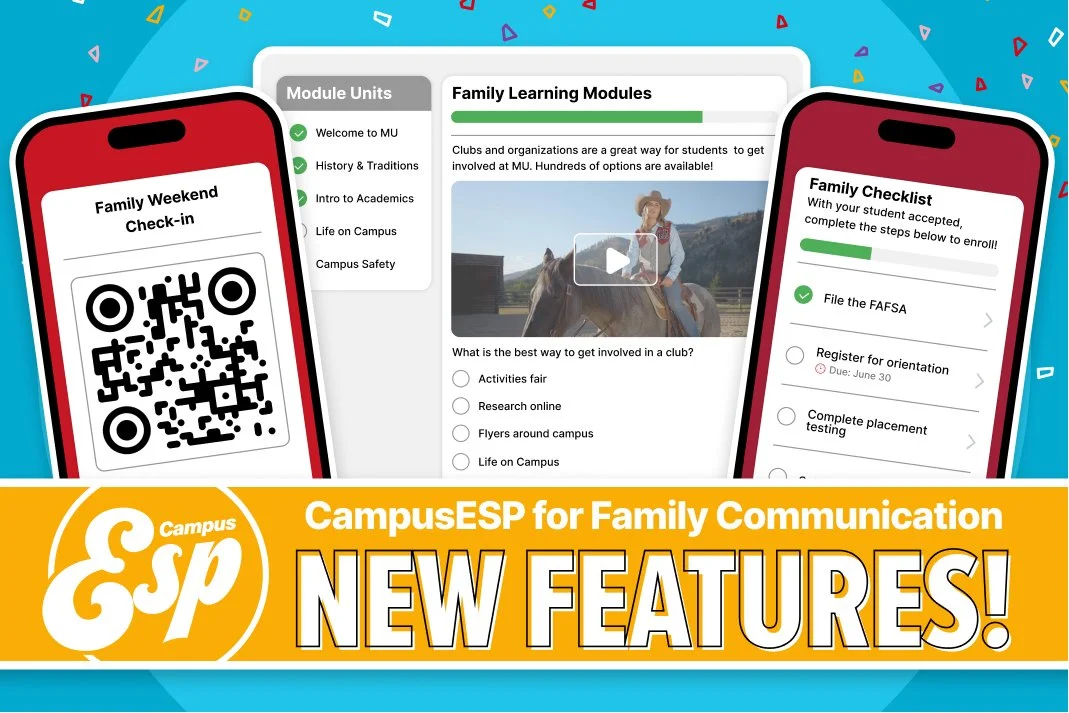
New event and orientation management tools for families: Checklists, learning modules, sessions & more
Our platform just got even better. We just launched new Event and Orientation Management tools for all Family Communication customers, so you can manage your entire Family Orientation and Family Weekend experience in one place — a smoother experience for families, and a lighter load for your team.

How South Alabama connected family engagement strategy across the student lifecycle
South Alabama increased yield 23.5 percentage points for students with engaged family members and saw a 276% rise in orientation confirmations. Learn how CampusESP unified communications, scaled FERPA connections, and guided families through the student lifecycle.

Supporting Black student success through family engagement
Morgan State and Morehouse show how intentional family engagement and campus communication tools can transform Black student success. Learn how HBCU leaders use CampusESP to align enrollment, orientation, financial aid, and career outcomes with what families need most.
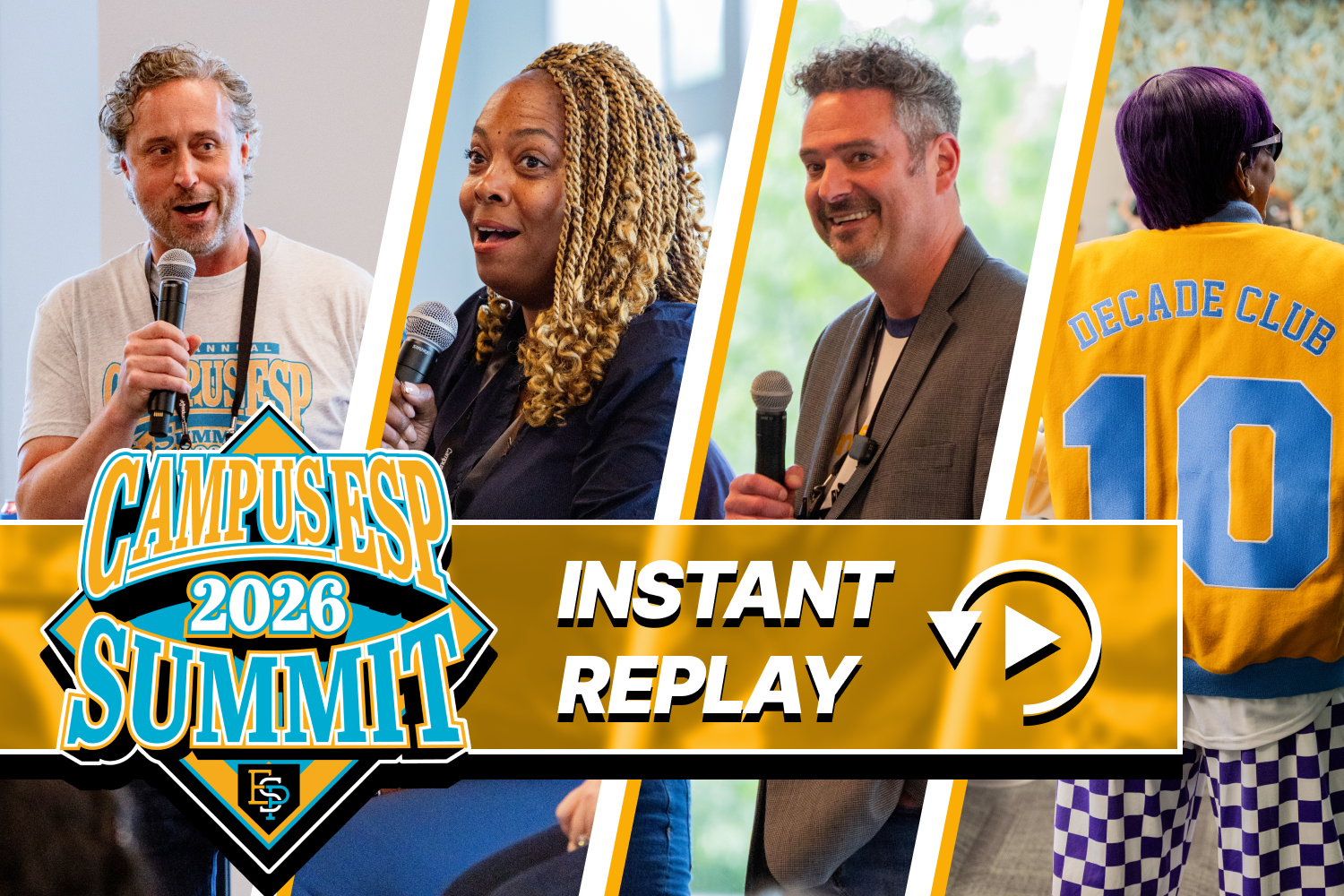
4 top takeaways from the 2026 CampusESP Summit
Summit 2026 is a wrap! 156 attendees from 104 institutions descended on Philadelphia for two days of customer stories, peer swapping, and straight talk about what's working in family engagement. From AI assistants fielding 3am parent questions to schools finally fixing their clunkiest processes, here are the four takeaways worth borrowing for your own campus.
Introducing CampusESP’s Family AI Assistant: Always-On Support for Today’s Families
Deliver instant, personalized support while offering deeper insight into what families need most. Beta tested across 9,000 parent interactions at 25 colleges and universities, our AI Assistant was designed specifically for the front lines of college family engagement.

Your ultimate guide to managing Family Weekend
Planning Family Weekend? We know it’s not all smiles and selfies—behind the scenes, it’s a full-blown production! From getting the word out to managing check-ins and everything in between, pulling off a smooth Family Weekend takes serious hustle. Check out how CampusESP makes it easier to plan, promote, and actually enjoy one of your campus’s biggest events.
What 43,000+ families really want from your college
New data on how families communicate, what they expect, and where most institutions still aren't keeping up.
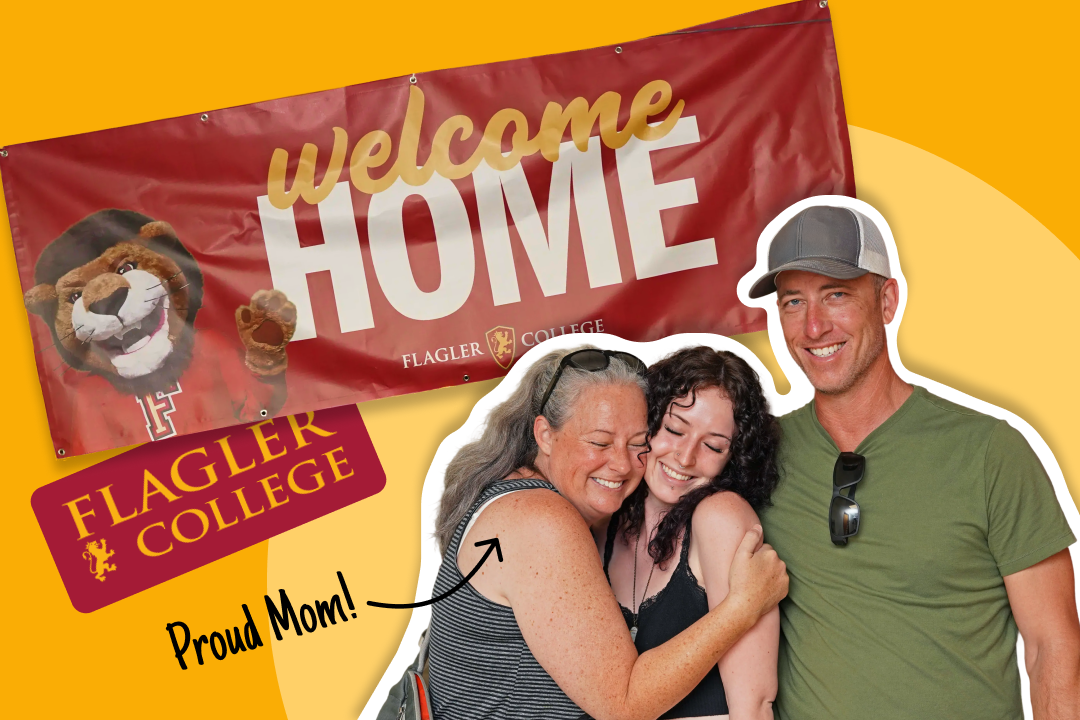
From move-in chaos to connection: How Flagler College rebuilt family trust
A chaotic move-in day became a turning point for Flagler College. By rebuilding trust with families through smarter communication, they reduced summer melt by 4% and dramatically improved payment and retention outcomes.
Texting families isn’t optional anymore. Here’s how to do it right
Text messages drive up to 3x higher engagement than email, yet most colleges still underuse them. Learn how Marymount University and New Mexico State University are turning everyday communications into timely, action-driving texts.
Your new parent orientation playbook
Orientation is a high-impact moment for families, but it can also be overwhelming. FSU turned three days of information into a lasting resource with their New Nole Orientation Hub, extending support well beyond move-in.
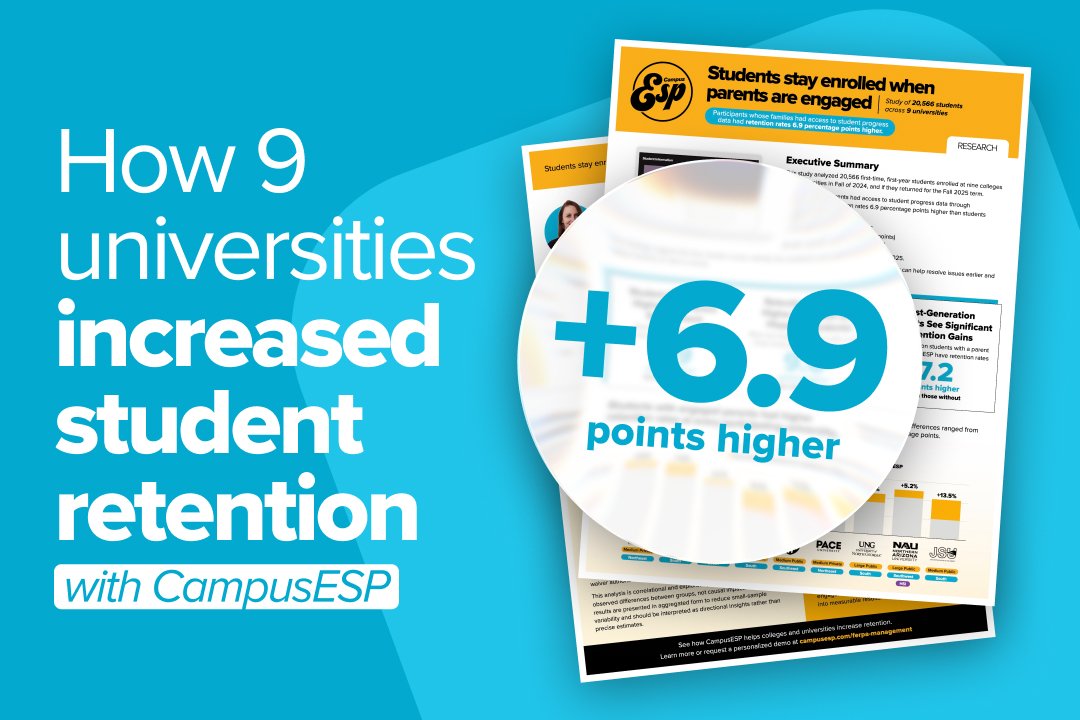
Students stay enrolled when parents are engaged
New research from nine universities and more than 20,000 students shows that when families are engaged, students are more likely to stay enrolled. In this year’s CampusESP retention case study, students with a connected parent saw 6.9 percentage points higher retention than those without.

From “Ramily” to results at WSSU
WSSU’s culture of “Ramily” extends beyond students to the families who support them. Learn how the university partnered with CampusESP to create a centralized family engagement strategy that supports students from admissions through graduation, resulting in students with engaged families yielding rates 5 points higher than average.
New research: Family engagement drives student retention
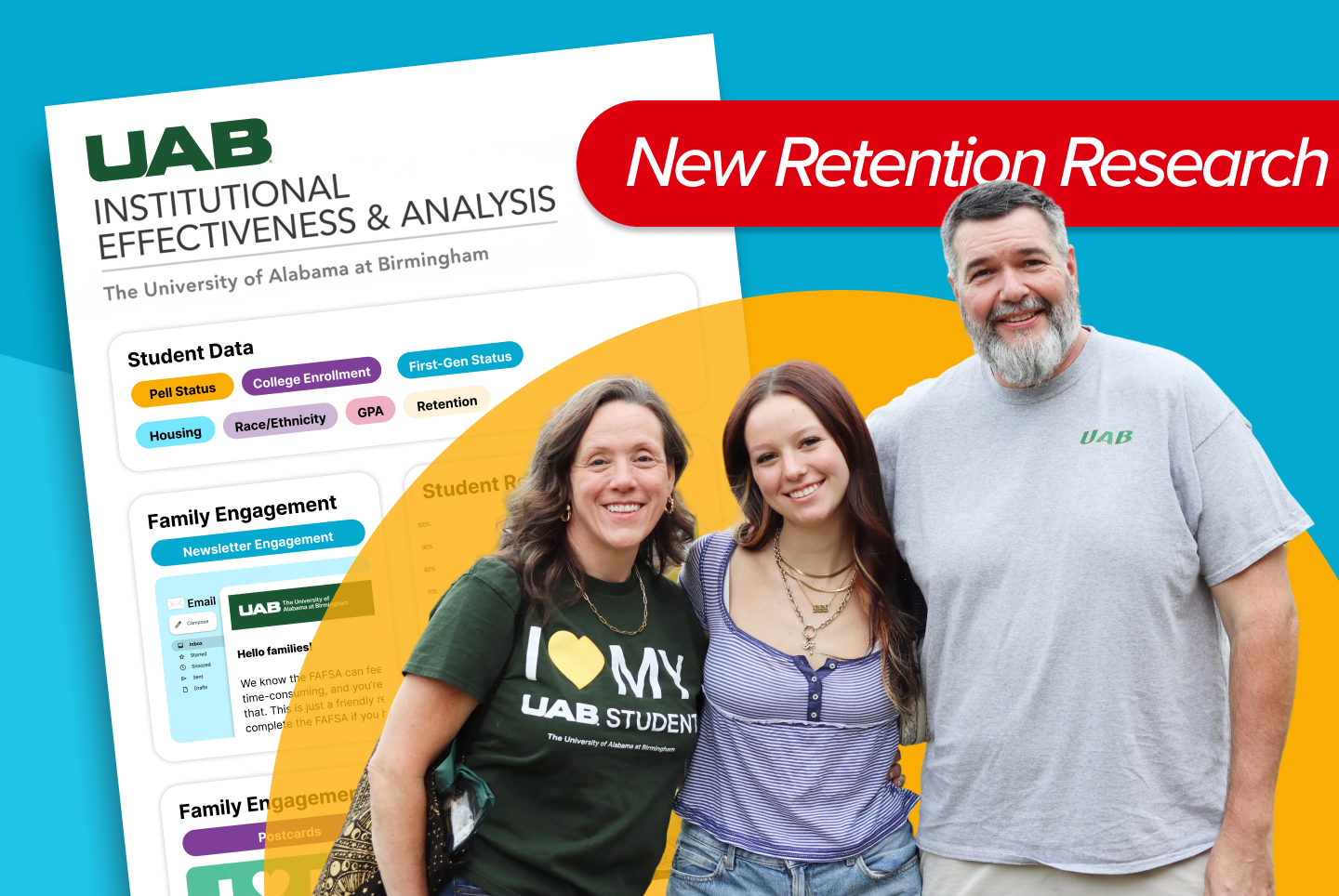
University of Alabama at Birmingham (UAB) research found students with high family engagement were 2.65x more likely to be retained, reinforcing family engagement as a measurable higher education retention strategy.