4 top takeaways from the 2026 CampusESP Summit
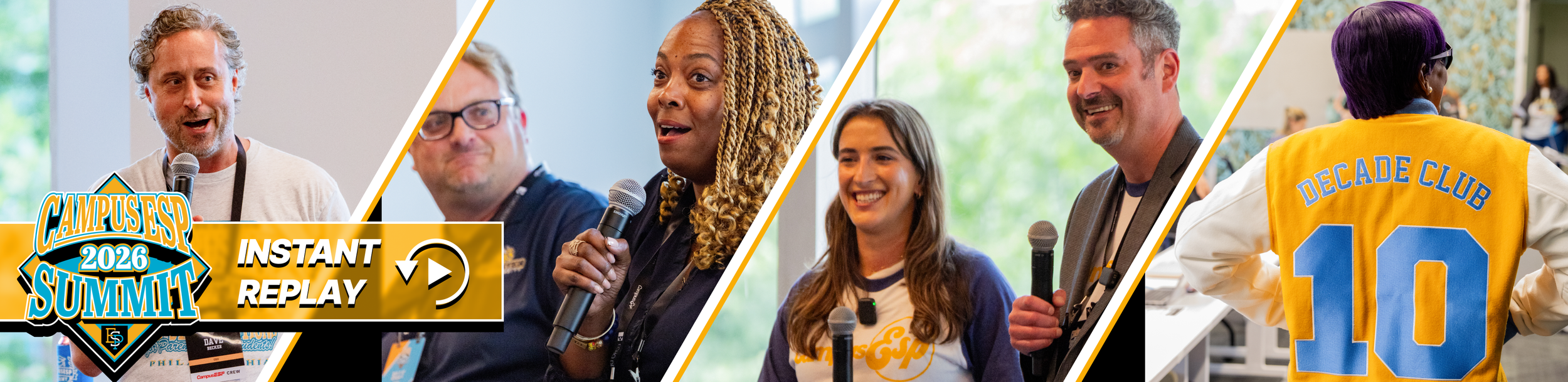
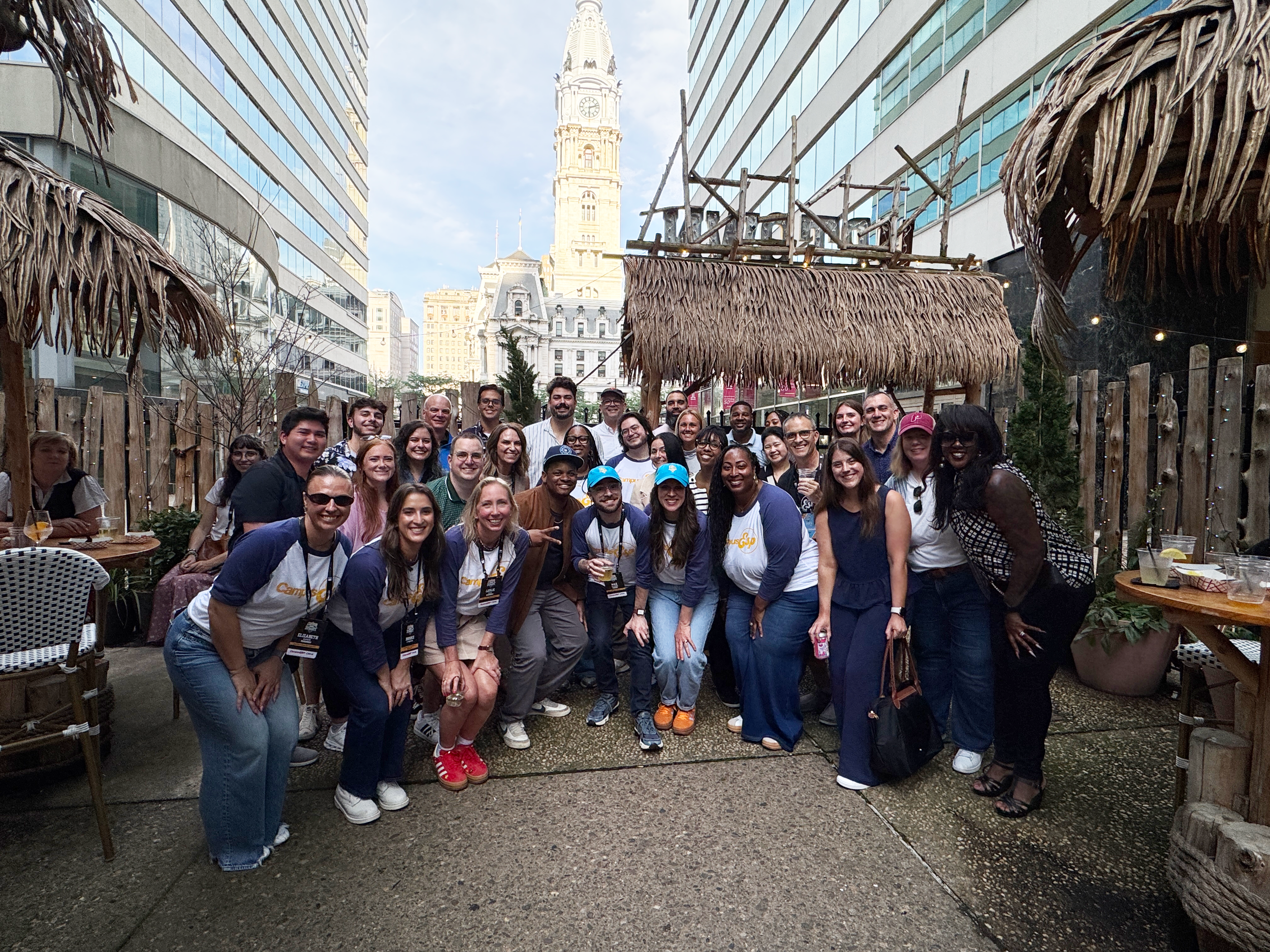
This year, for our 8th annual CampusESP Summit, we welcomed 156 attendees representing 104 institutions to our hometown of Philadelphia. We also stretched the event across two days for the first time, which meant more customer stories, more peer conversations, more product updates, more happy hours, and a lot more time for people to sit down with others who understand the work they are doing.
That last part is what makes Summit special: It is one thing to hear from CampusESP about family engagement, it’s another thing to sit next to someone from another campus who is also trying to answer more family questions, manage more communication, prove more impact, and do it all with limited time and staff.
The energy in the room was fantastic. But underneath the baseball theme, the swag tent, and all the Philly fun, the message was pretty clear: family engagement is getting more important, and the work is not getting easier.
Here are the four biggest takeaways from this year’s Summit.
1. Family expectations have never been higher
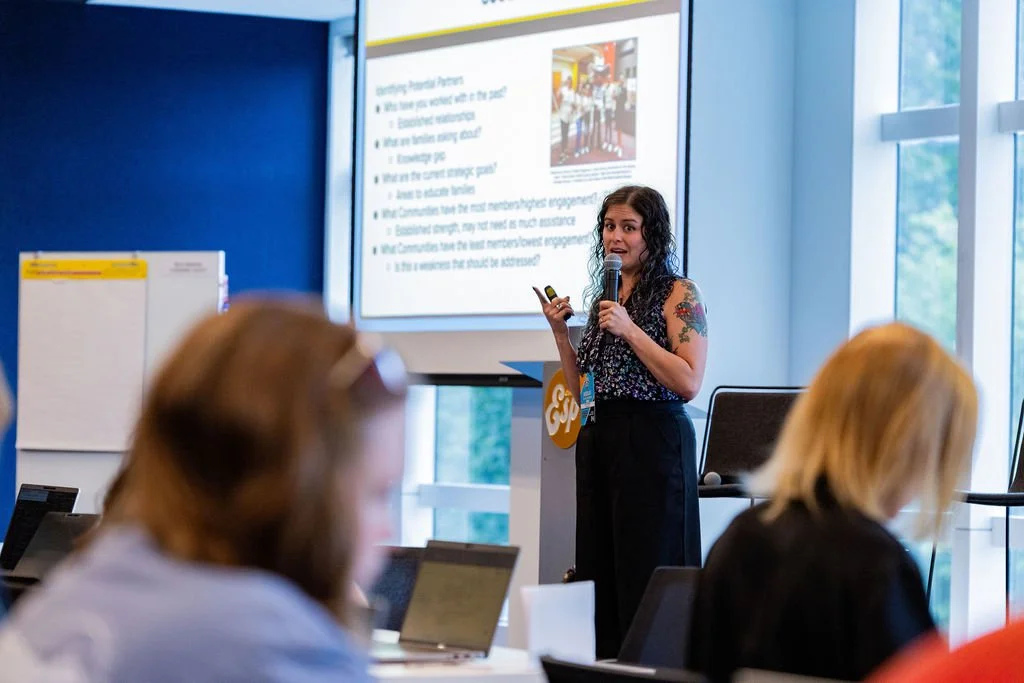
Morgan Chavez-Brannon, Program Director at Texas Tech University
We all know higher education is up against a lot right now. There are cost concerns, enrollment pressures, political narratives, tighter budgets, and very real questions from families about whether college is worth the investment. That is the environment our customers are operating in, and it is exactly why family communication has become more important. In 2015, 43% of families preferred to hear from their student’s college at least weekly.
At the same time, family satisfaction with college tuition as a worthwhile investment dropped from 77% in 2024 to 59% in 2025.
The schools doing this well are not just sending more messages. They are making family communication easier to scale and more useful.
Texas Tech University shared how they built a repeatable process for bringing campus partners into family communication. They use CampusESP data and family questions to see where families need more help, then make it easy for partners to share timely updates about housing, billing, academic colleges, and student services.
Webster University showed what this looks like for a small team. They lean on the CampusESP Content Network for article, newsletters, recurring emails, surveys, AI tools, and reporting. The result: 69% of Webster’s family content was created by CampusESP, their team spends about two hours per week in the portal, and students with families using CampusESP saw yield rates 18 points higher than the institutional average.
👉 Join us July 14 at 1 PM ET to dive deeper into how Texas Tech and Webster are scaling family engagement without scaling their team.
The opportunity is helping campuses channel that involvement in a way that is useful, scalable, and tied to real outcomes.
2. AI is already in your platform — and it's working
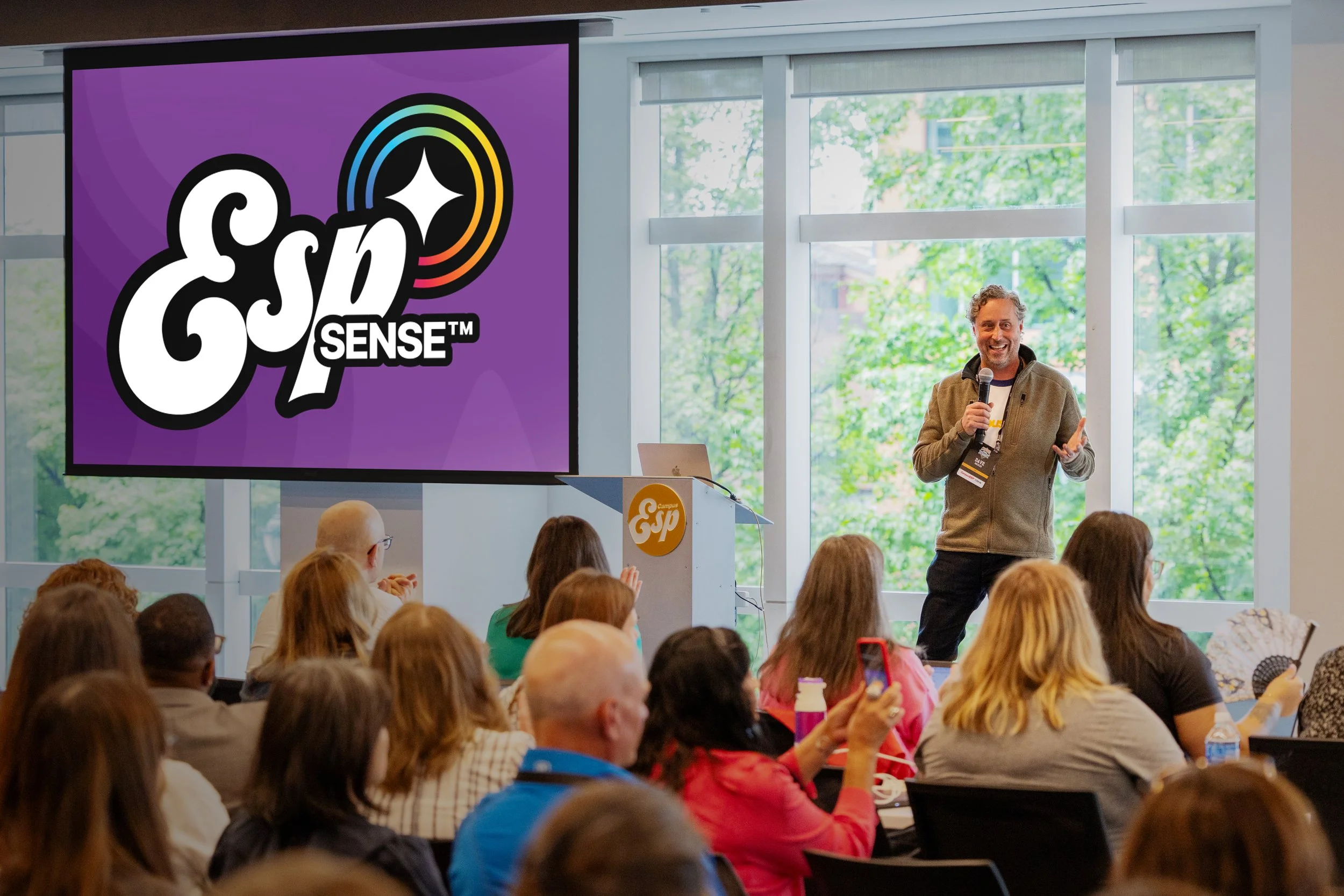
CEO Dave Becker introducing ESP Sense™, CampusESP’s AI engine
Campuses do not need another complicated system to build, train, and manage. They need AI embedded into the tools they already use, so families can get answers faster and staff can get a clearer view into what families actually need.
That is why we introduced the ESP Sense™ Family AI Assistant, a new engagement tool that delivers instant, personalized support while giving campuses deeper insight into family questions and concerns.
Summit attendees heard directly from customers who beta tested the Family AI Assistant across 25 schools, with about 3,000 families participating. Families asked about events, housing, class registration, financial aid, deadlines, and all the questions that tend to show up at night, on weekends, and during the busiest times of year.
Steven Ponce, Director, Parent and Family Communication and Engagement at Santa Clara University summed up the value well: “You’ll get a front seat into what parents are not telling you.”
Santa Clara University saw families ask the AI Assistant questions they may not have asked a staff member directly, including questions about grades, registration, and FERPA-protected information. That gave their team a clearer view into what families wanted access to and where there was confusion.
UW-Milwaukee framed AI as an access tool, especially for first-generation families or families newer to higher ed who may need answers before work, after work, late at night, or across time zones. And yes, we also heard a line that got a laugh because it was a little too relatable: “Our website is a cluster.” The AI Assistant helped uncover broken links, outdated information, and confusing web content because it was pulling from the same places families were trying to navigate.
AI is not replacing the human work. It answers the first layer of questions, reduces some of the call volume, and helps staff get to deeper engagement faster. Or as Melody Ferguson, Dean of Admission at Pacific Lutheran University, put it: “It creates a moment where you get to get past those initial questions and get deeper much quicker.”
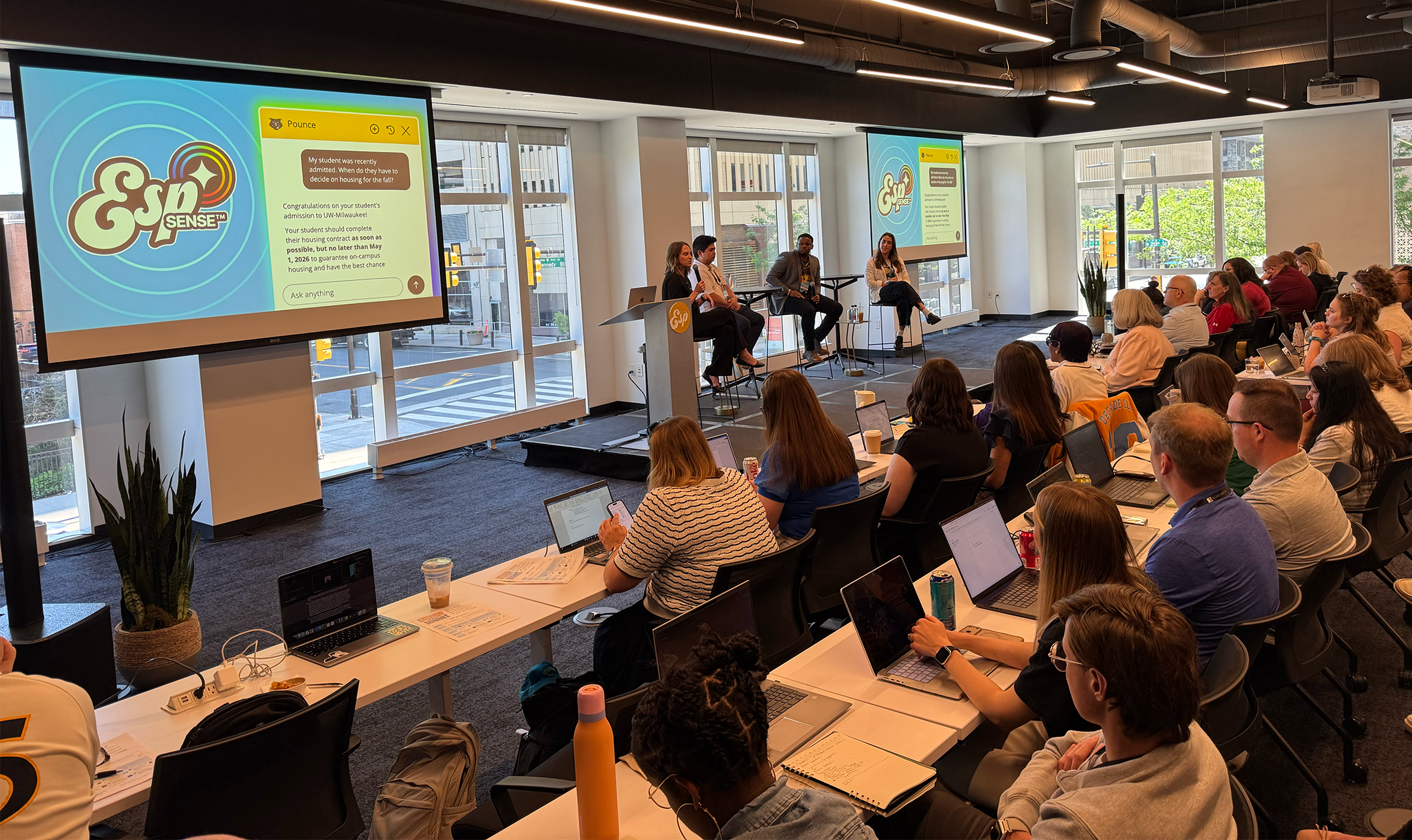
Panel discussion, University of Wisconsin - Milwaukee, Santa Clara University, Pacific Lutheran University
3. It’s time to fix antiquated processes that are not working
We launched CampusESP for Student Orientation about a month ago, but Summit attendees got something better than a product overview. They got to hear directly from Morgan State University, one of our pilot customers, about how they used it over the past year and the results they are already seeing.
Their old orientation process created too much friction. Registration was complicated. Errors happened. Students and families had questions. Staff were buried in calls and emails. The result was exactly what Richard Kearney, New Student Programs Coordinator at Morgan State University, described: “When I say they have saved us a bunch of phone calls and a bunch of emails, I mean, we were drowning before.”
Morgan State moved orientation into CampusESP and created a cleaner experience for students, families, and staff. They also rethought what orientation registration could do. Now, it helps confirm a student’s intent to register and unlocks access to the housing application, which means orientation registration is no longer just an event sign-up. It is part of the student’s transition into the institution.
Since launching in January, Morgan State had nearly 2,500 students registered for orientation at the time of the Summit session. They were running registrations two times ahead of pace and were about 700 students ahead compared to the same point last year. Chevaun Whitman, Director of Bear Essentials Student Services Center, called out the impact of the win: “It was like an answered prayer.”
Then the room got to hear from the parent side too. Fritzie Charm-Merriweather from University of Maryland Baltimore County was there as both a CampusESP customer and the parent of a student going through Morgan State’s orientation process. “Everything was so smooth,” she said. “Having a son who I have to chase after every day, this was amazing.”
That is the kind of moment that is hard to capture in a recap. The team that fixed the process was in the room. A parent who experienced the process was in the room. And everyone else got to see what happens when better technology actually removes friction for students, families, and staff.
Sometimes the biggest win is not adding another step. It is fixing the process that is already causing the most confusion.
4. Connection trumps just communicating
CampusESP Summit audience
One theme came up across the customer sessions, roundtables, and hallway conversations: families want connection, not just communication. Communication is sending the message. Connection is making families feel like they have a place to go, a role to play, and people they can learn from.
That is why CampusESP’s Discussion Boards were such a big topic at Summit. Families do not necessarily want another Facebook group. They want a trusted, moderated, campus-connected space where they can ask questions, hear from other families, and get useful answers.
The University of Kansas used Discussion Boards for live Ask Me Anything sessions around orientation, giving staff one place to answer timely questions so every family could benefit. George Washington University used Discussion Boards around moments like commencement and move-out, where families were looking for practical details about bag policies, storage, and logistics. Drexel University created a dedicated Center for Autism and Neurodiversity parent community, which grew to 292 parents and saw a 73% open rate and 24% click rate, outperforming Drexel’s overall family engagement averages.
We saw the same theme in parent giving. The University of South Carolina used the Gamecock Family Hub to channel parent support toward Student Affairs priorities like wellness, access, and basic needs. Parent donors to Student Affairs increased 112% year over year, CampusESP-attributed links drove 187 gifts, and the team unlocked $25,000 for Carolina Cares, the student emergency assistance fund.
The University of Oregon shared a different kind of giving story: one family owned a dry cleaner and wanted to help first-generation students access career clothing. Morehouse College shared the Renaissance Room, where students can access clothing, toiletries, and other essentials.
That is what family engagement can become when it is done well. It is not just open rates, clicks, or one more newsletter. It is turning family involvement into real support for students.
The bottom line
The best ideas from this year’s Summit were not about doing more work. They were about making the work more manageable and more effective: communicate before families have to ask, use AI to make support easier to access, fix the processes that create friction, give families a real place to connect, and lean on the right partners so your team can focus on the work that only humans can do.